
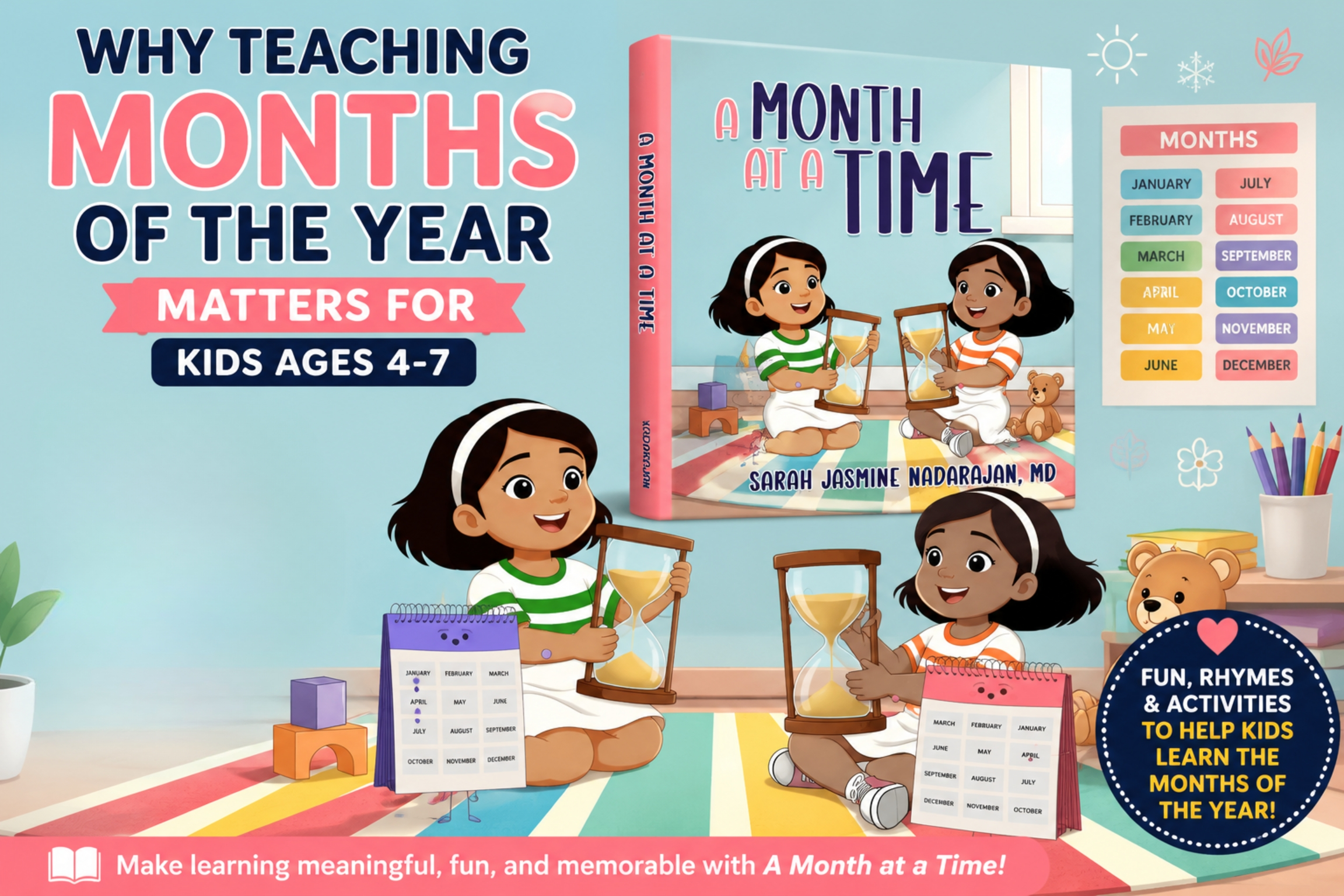
Teaching the months of the year for kids is an important step in early childhood education. Between the ages of 4 and 7, children begin to understand the passage of time, recognize seasonal changes, and connect important events like birthdays, holidays, and school activities to the calendar.
Learning the months is more than memorization. It helps children develop language, sequencing, memory, and problem-solving skills while preparing them for success in kindergarten and beyond. With engaging books like A Month at a Time by Sarah Jasmine Nadarajan, MD, along with songs, rhymes, and hands-on activities, learning becomes both meaningful and enjoyable.
Why Learning the Months Is Important
Children are naturally curious about the world around them. Understanding the calendar gives them a better sense of routine and helps answer questions like:
- What month is my birthday?
- When does summer begin?
- How many months until vacation?
- What season comes next?
These early childhood calendar concepts encourage logical thinking while helping children understand how time is organized.
Teaching Months of the Year to Preschoolers
When teaching months of the year to preschoolers, simple and engaging methods work best. Young learners remember information more easily when they can hear, see, and interact with it.
Try these ideas:
- Read colorful picture books about the months.
- Use a classroom or home calendar every day.
- Discuss the current month during morning routines.
- Talk about weather and seasonal changes.
- Celebrate birthdays and holidays by identifying the month.
Repeating these activities consistently helps children become familiar with the calendar naturally.
Use Songs and Rhymes to Improve Memory
One of the easiest ways to teach the months is through music. A fun months of the year song introduces the names in order while making learning exciting.
Pairing the song with a simple months of the year rhyme helps children remember the sequence through rhythm and repetition. Singing together also improves listening skills, pronunciation, and confidence.
Books that include rhyming text can reinforce these lessons and make learning enjoyable both at home and in the classroom.
Hands-On Months of the Year Activities
Children learn best through active participation. Interactive months of the year activities help reinforce learning while keeping kids engaged.
Some effective activities include:
- Matching months with seasons
- Creating a birthday calendar
- Coloring seasonal pictures
- Arranging month cards in order
- Making a classroom calendar
- Discussing weather for each month
These activities strengthen memory while encouraging teamwork, observation, and communication.
Worksheets and Printables Make Learning Easier
Parents and teachers can reinforce lessons using a months of the year worksheet after reading or classroom instruction.
Worksheets allow children to:
- Trace month names
- Put months in the correct order
- Match months with seasons
- Complete simple puzzles
- Practice writing
A months of the year printable can also be displayed in classrooms or at home for daily review. Visual reminders help children build confidence through repetition.
Building Calendar Skills for Kindergarten Success
Strong calendar skills for kids prepare children for future classroom learning. Understanding months helps students:
- Follow school schedules
- Recognize important dates
- Understand seasons
- Learn sequencing
- Build organizational skills
Because of these benefits, learning the months of the year for kindergarten becomes an essential part of early education.
How to Teach Calendar to Preschoolers
Parents often ask how to teach calendar to preschoolers in a way that feels natural rather than overwhelming.
Here are a few simple tips:
- Practice for a few minutes each day.
- Use colorful visuals and illustrations.
- Read educational books together.
- Sing songs and recite rhymes.
- Connect each month to real-life experiences.
- Celebrate milestones on a family calendar.
Keeping lessons short, interactive, and consistent helps children retain information more effectively.
Make Learning Fun with A Month at a Time
Books play an important role in helping children understand new concepts. A Month at a Time introduces the months through engaging rhymes, colorful illustrations, and age-appropriate language designed for children ages 4–7.
Whether used by parents during storytime or by teachers in the classroom, the book supports early learning while making calendar concepts enjoyable and memorable.
Conclusion
Teaching the months of the year for kids gives children valuable skills that extend far beyond learning the names of the months. It strengthens memory, language development, sequencing, and time awareness while building confidence for future learning.
By combining books, songs, rhymes, worksheets, and interactive activities, parents and teachers can create positive learning experiences that children will remember for years to come.
Frequently Asked Questions
Why should children learn the months of the year?
Learning the months helps children understand time, seasons, routines, and important events while improving memory and sequencing skills.
At what age should children learn the months?
Most children begin learning the months between ages 4 and 7 through songs, stories, classroom activities, and everyday conversations.
What is the best way to teach months of the year to preschoolers?
The most effective approach combines picture books, songs, rhymes, hands-on activities, and daily calendar practice to keep learning fun and engaging.
Are worksheets helpful for learning the months?
Yes. A months of the year worksheet reinforces classroom lessons by helping children practice ordering, writing, and recognizing the months.
Why are songs and rhymes effective for teaching months?
A months of the year song and months of the year rhyme use repetition and rhythm, making it easier for young children to remember the correct sequence.